The New Custody Schedule Is Hard on Your Kid. Here's Something That Actually Helps.
Nobody warns you that the hardest part of a custody schedule isn't the logistics. It's the drop-off. The quiet ride to dad's house. The two days where your kid doesn't have a way to just reach you.
You can plan the pickup times, split the holidays fairly, and get the parenting app set up right — and your kid can still sit in the back seat on transition day looking like their whole world just rearranged itself. Because it did.
Adults process a new custody schedule with logic. Kids process it with their bodies. They miss you in a way they usually can't name and definitely can't schedule around. And on the days they're at the other house, most of the tools you'd normally reach for — a text, a call, a video chat — require a phone, a good moment, and two adults willing to coordinate it.
What Nobody Tells You About the Off Days
The transition itself gets most of the attention. What gets less attention is everything after it — the ordinary Tuesday at the other house when your kid just wants to know you're still there.
That's the gap HER wishes someone had pointed out sooner: kids don't need a long conversation to feel connected. A lot of the time, they need something small, physical, and theirs — something that doesn't route through a parent's phone or a scheduled call window.
One of my kids was having a hard time with the new custody schedule — the back-and-forth, the missing-you-on-the-off-days part nobody prepares you for. We got a Bond Touch bracelet. She wears hers, I wear mine. She can send me a tap from her dad's house whenever she needs to feel like I'm still there. It didn't fix the schedule. It gave her something to do with the feeling instead of just sitting in it.
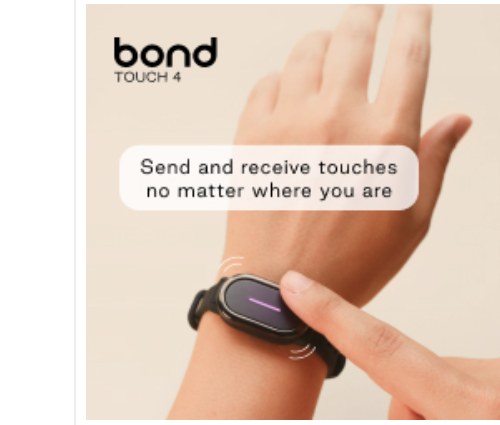
What a Bond Touch Bracelet Actually Does
Bond Touch makes a pair of small wearable bracelets that stay linked over any distance. Tap yours, the other person's vibrates and lights up — that's the whole interaction. No app to open, no message to type, no adult standing over a shoulder helping compose a text. A kid who can't read yet can still send one.
Over a million people have used them to stay close across distance — most of them long-distance couples, but plenty of long-distance families, military households, and kids splitting time between two homes too.
This is not therapy, and HER isn't a therapist. If a kid is struggling significantly with a custody transition — not just missing you, but really struggling — that's a conversation for a child therapist or your co-parenting counselor, not a bracelet. This is a small, practical tool for the ordinary hard days, not a fix for the serious ones.
Bond Touch 4 vs. Bond Touch 4 POP
Both versions do the same core thing — send and receive a touch — in two different looks.
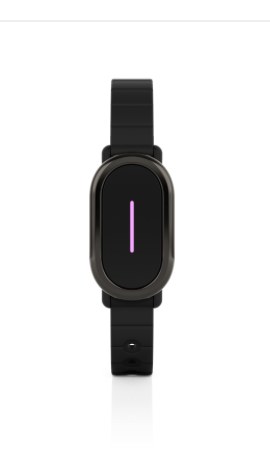

For a kid, the classic black pair tends to read a little more low-key and durable for everyday wear. The POP finish is the one that gets picked when they want it to actually look like jewelry, not a gadget.
Other Ways to Try This, If a Bracelet Isn't the Move
A matching bracelet isn't the only version of this idea — it's just the one that requires the least from a kid who's too young, too tired, or too upset to type anything.
| Option | Needs a phone? | Good for |
|---|---|---|
| Bond Touch bracelet | No | Young kids, wordless reassurance, both houses |
| Kids' smartwatch (COSMO JrTrack) | No, the watch has its own line | Kids ready to call or text, not ready for a phone |
| Scheduled video call | Yes, plus two cooperating adults | Older kids, longer conversations |
| Notes hidden in the overnight bag | No | Any age, one-directional, needs advance planning |
| Shared photo album app | Yes | Kids old enough to use a phone, ongoing updates |
| A matching small object (bracelet, keychain) | No | Symbolic comfort, low cost, no coordination needed |
None of these need the other parent's cooperation to work, which matters more than it should have to in a lot of co-parenting situations.
Bond Touch Bracelets
Bond Touch 4 and Bond Touch 4 POP, $69–$158, single or pairs.
The custody schedule isn't going to feel fair to your kid for a while, maybe ever, no matter how well you two coordinate it. That part's out of your hands. What's in your hands is giving them one small, reliable way to reach you on the days they can't just walk into the next room and find you there.
HER's Letters — Every Tuesday
The check, the red flag HER noticed, and one question worth asking before you go further.
Every Tuesday · Free · Unsubscribe in one click